Matt Osborne, in his own words. 13 August 2026. Quotes may be used freely.
Matt turned forty and, by his own account, could have bought a motorbike. He built a health app instead.
“It may be the most productive midlife crisis I could have chosen,” he says.
Strictly, his studio built it. Me. is the first product from Oi Studios, an independent studio of ten in Hobart that has been working for thirty years, and it was made by that team rather than by one person in the evenings. Matt is its founder.
The founder
A collector already
He is a collector by disposition. Records, mostly.
“I collect records because I understand the value of having the things I love on hand. I like tangible objects. I like being able to revisit things, and to use the collection to remember different times. It might sound philosophical, but being able to remember the past helps me make good decisions about the future.”
That is the argument for Me. made about vinyl, and it arrived without the app being mentioned.
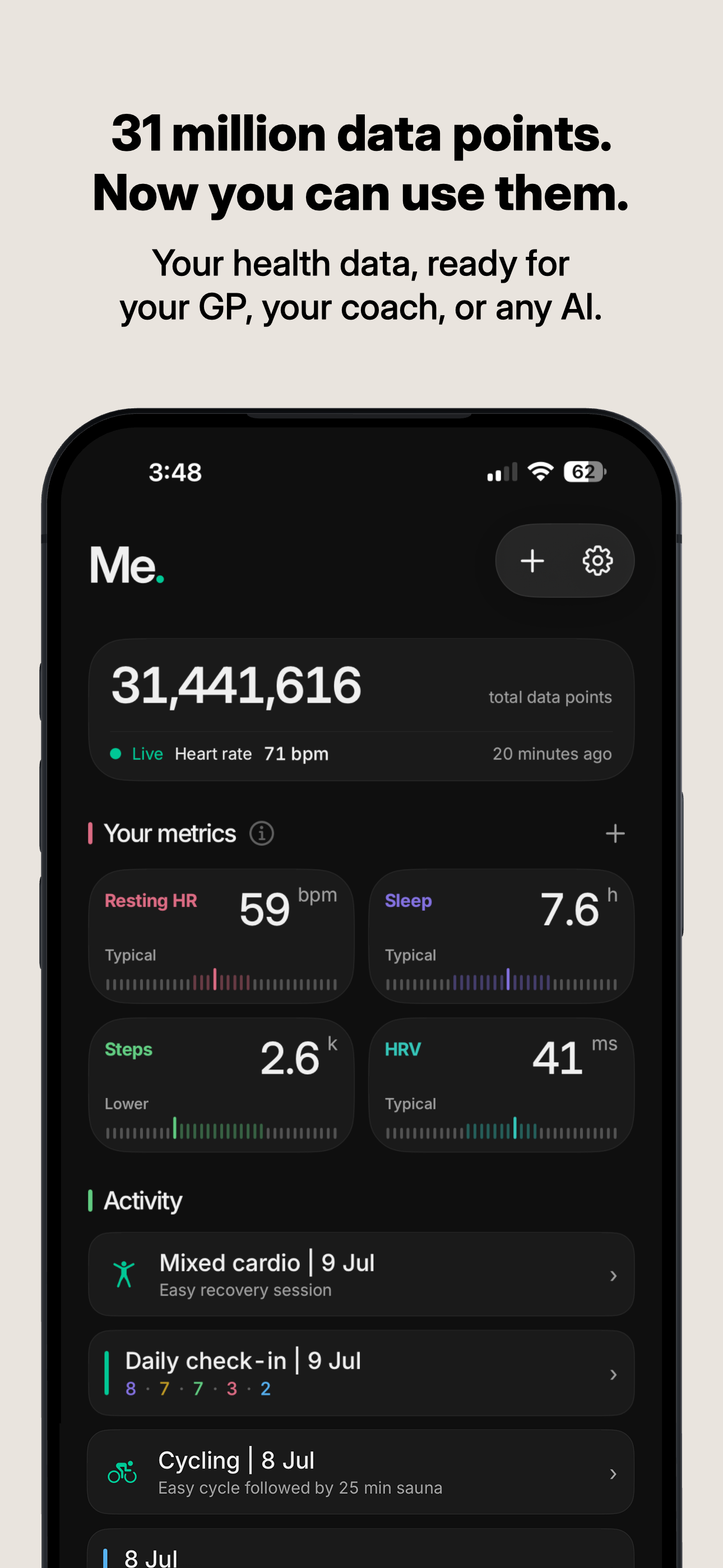
He collected his health the same way. About three years of workouts, sleep and metrics, spread across Apple Health and a handful of other apps that each held a piece of the picture and occasionally disagreed with one another. His own record now runs past 31 million data points.
There was a reason it mattered more than tidiness.
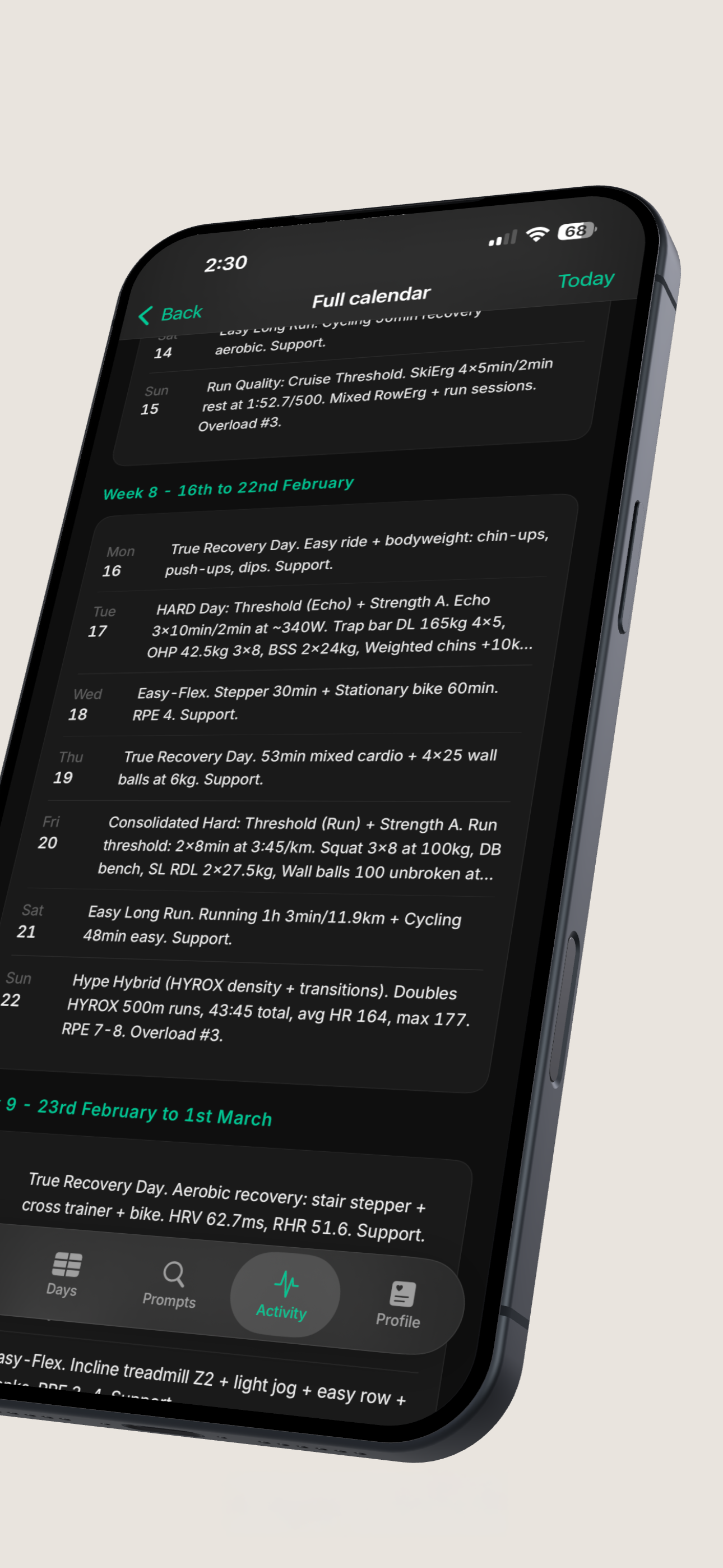
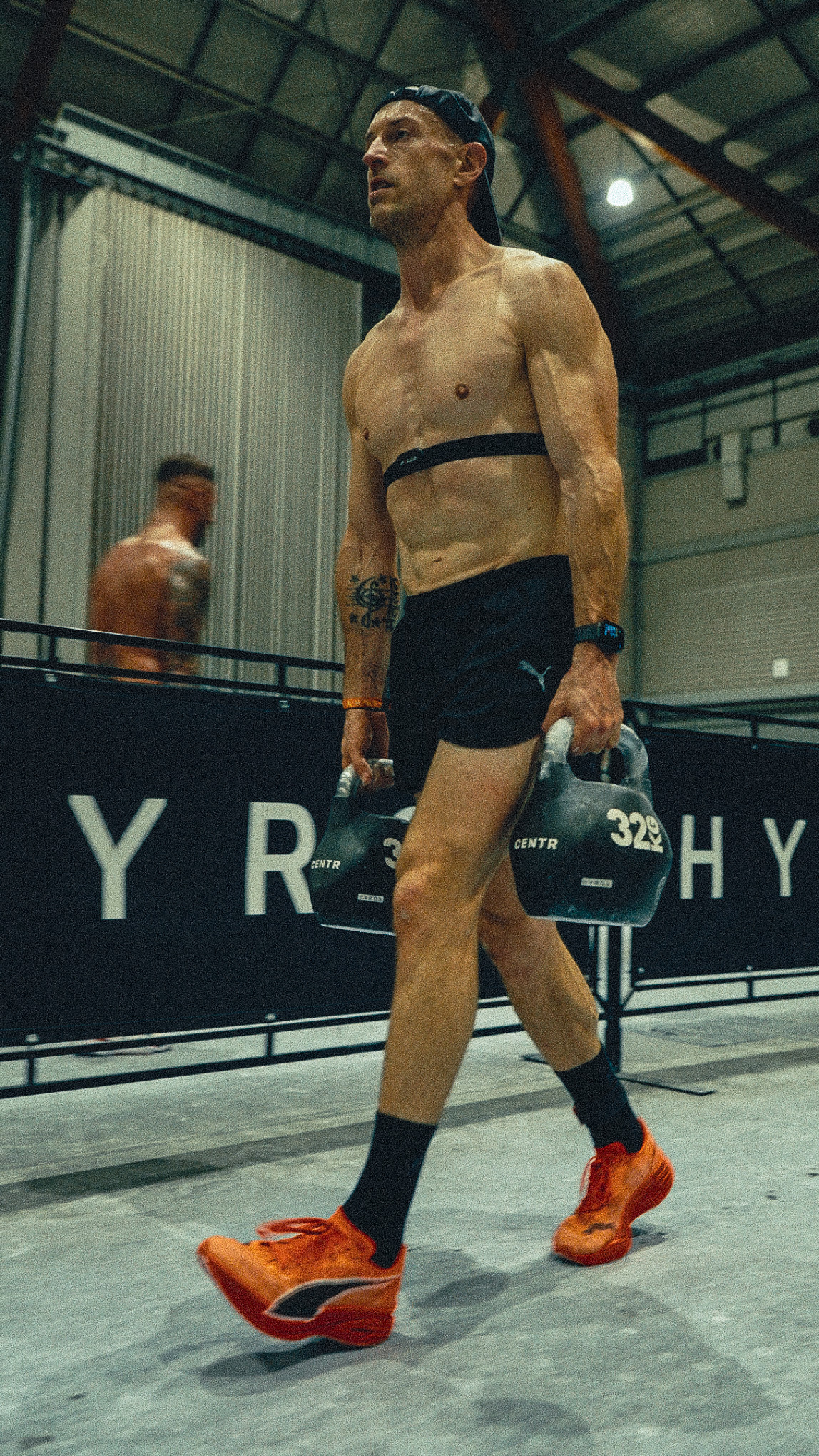
“I am a hybrid athlete. I run, and I lift. Collecting the data to manage that around my work and my family schedule has been imperative. It is how I balance those stresses, mentally and physically. Me. has allowed me to self-coach based on everything I have learned over the last few years. I essentially could not have done it without Me.”
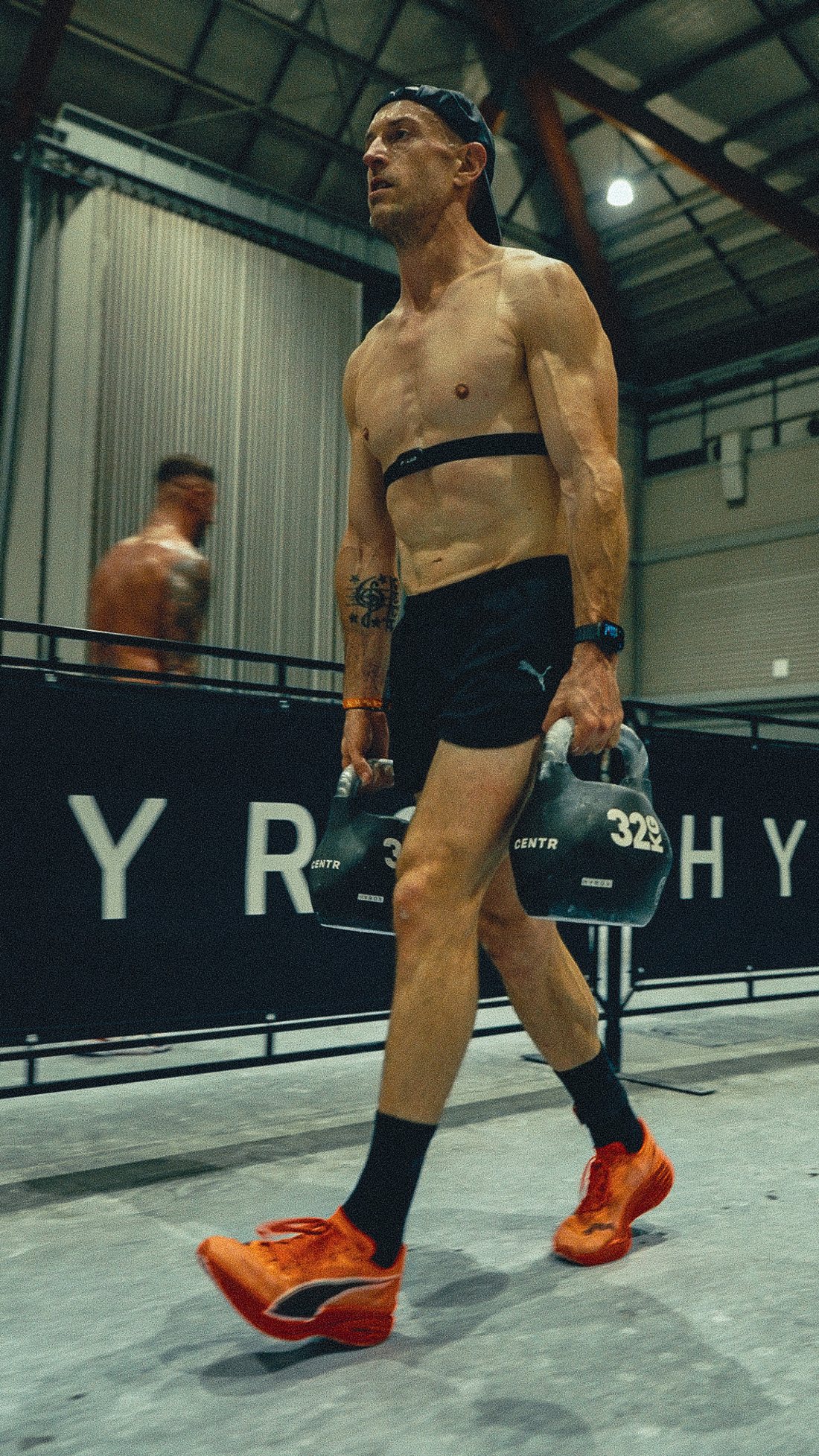
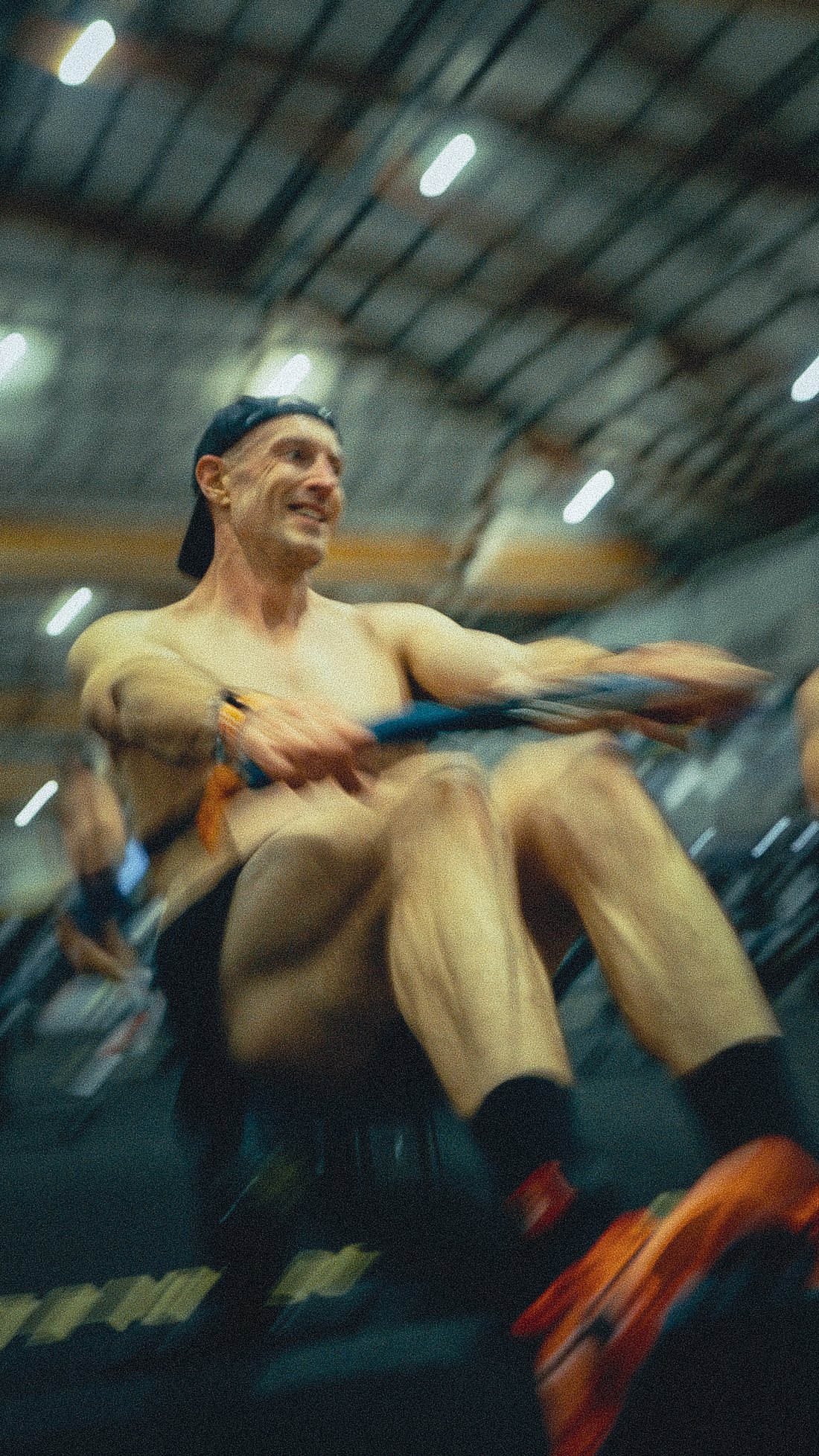
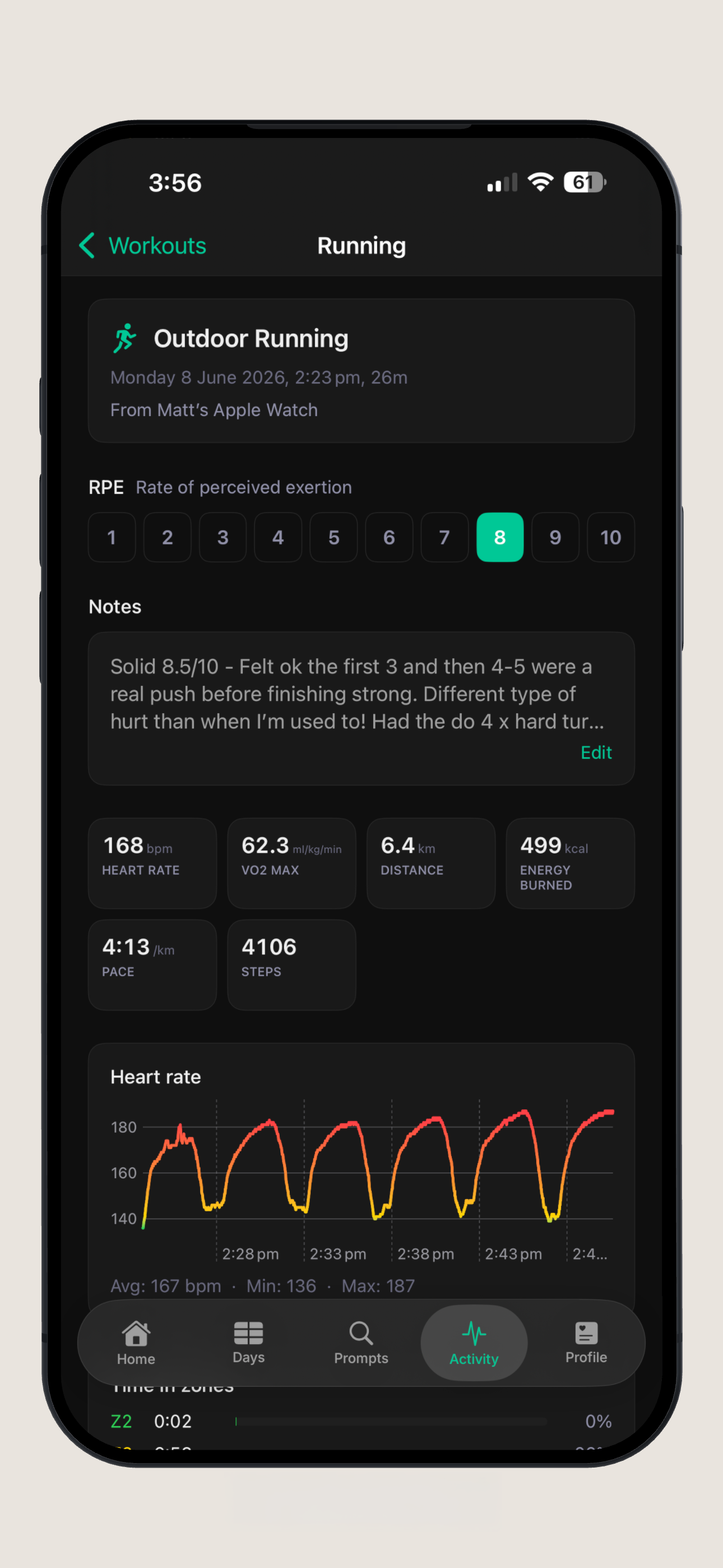
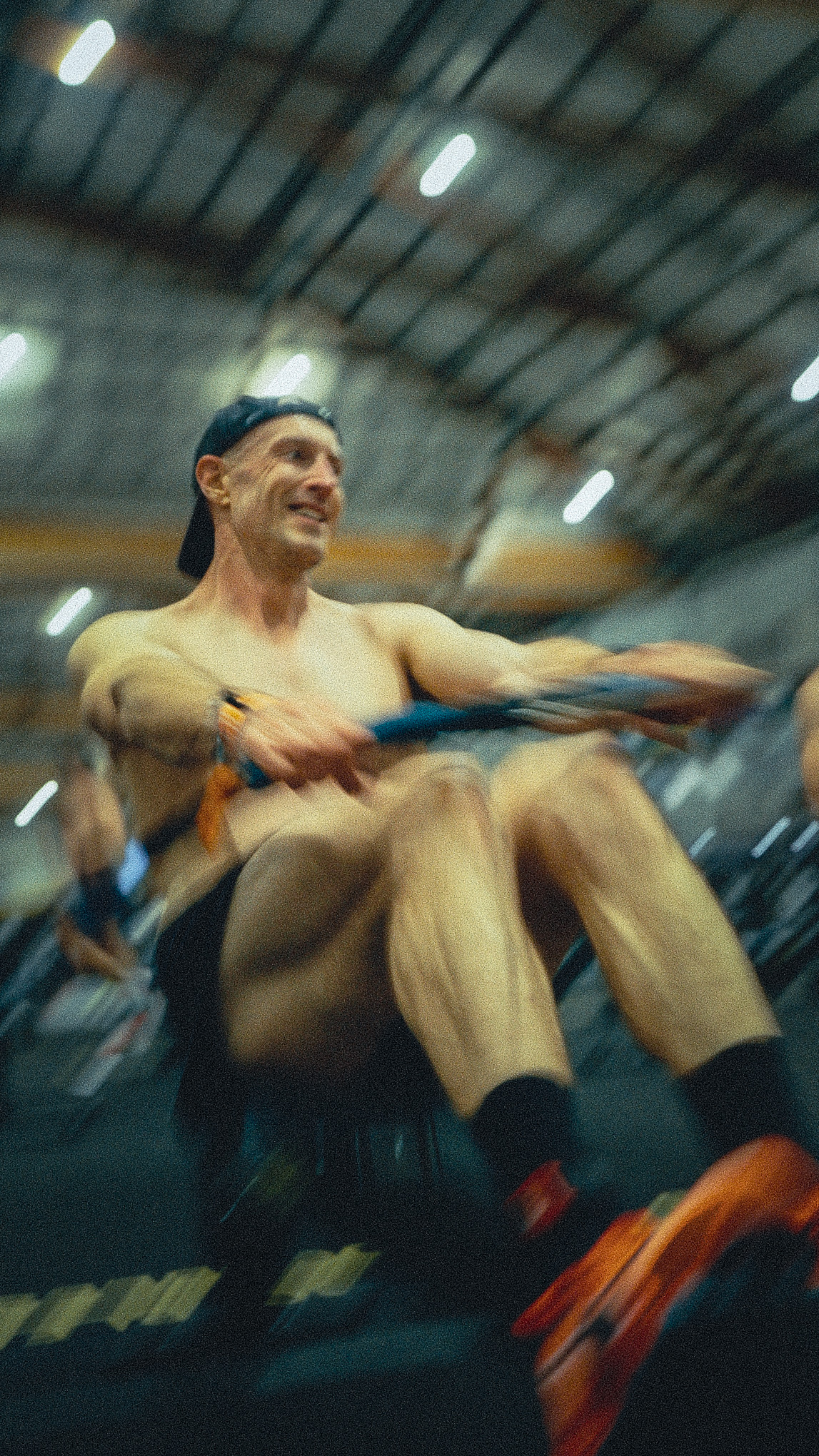
Hyrox. The chest strap and the watch are the collecting, happening while the work does.
The difference was that the records were in order and the health data was not. Every morning the same question, and no confident answer: am I recovering well enough, is the session I planned still the right one.
“The problem is not collection. It is context.”
And the gap is not only his.
“Anyone who already has Apple Health data and wants it to be useful rather than just collected. Someone trying to make sense of six months of poor sleep. Someone managing several medications and appointments who does not want to walk into a specialist relying on memory. Someone training seriously who wants their coach working from the whole picture, not just a workout log. Me. does not assume a diagnosis, a sport, or a particular device. It assumes you have data, and a GP, coach, or AI you trust to look at it.”
The moment
What an AI cannot reach on its own
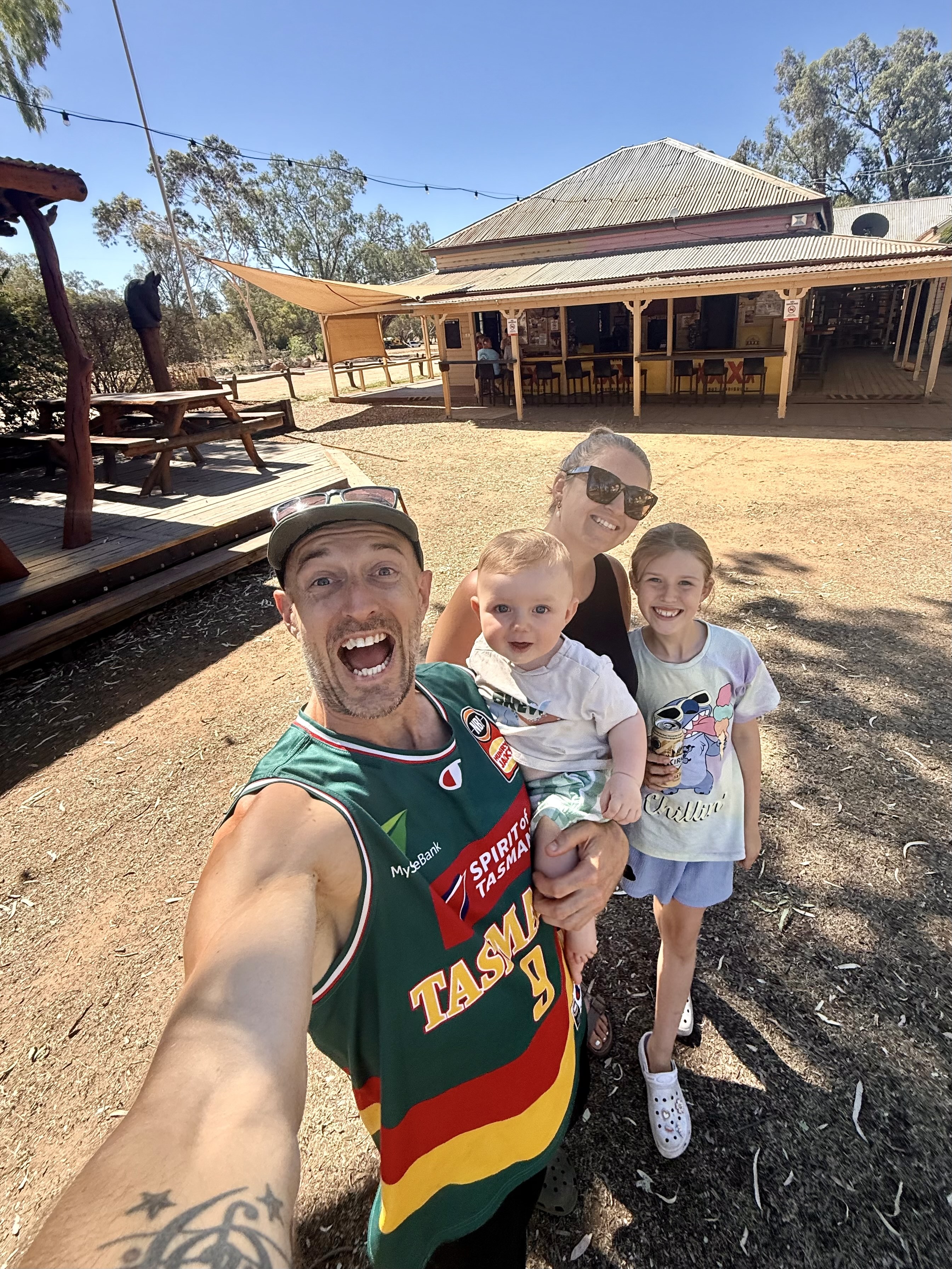
“My watch knew I slept badly. It had no idea a baby was involved.”
A sleep score of five hours is accurate and useless on its own. A workout that looks lighter than usual means one thing if you are tired and another if you are coming back from an injury. None of that context is in the data, and all of it is known to the person the data belongs to.
“A lot of people are still playing with image generation and not really understanding the opportunities this technology presents. The major one for me is being able to build systems and applications that benefit me, my work, and the people around me.”
“We should not be scared of technology, but we should be cautious with it, and we should learn to understand it. If there is an opportunity to use it to make better decisions in our lives, of course we should be interested.”
“A perfect use is long-term pattern recognition, and being able to highlight cause and effect from your own data.”
That only works if the record is complete. An AI reading numbers alone can describe what happened. An AI reading those numbers with the context around them can help a person see why.
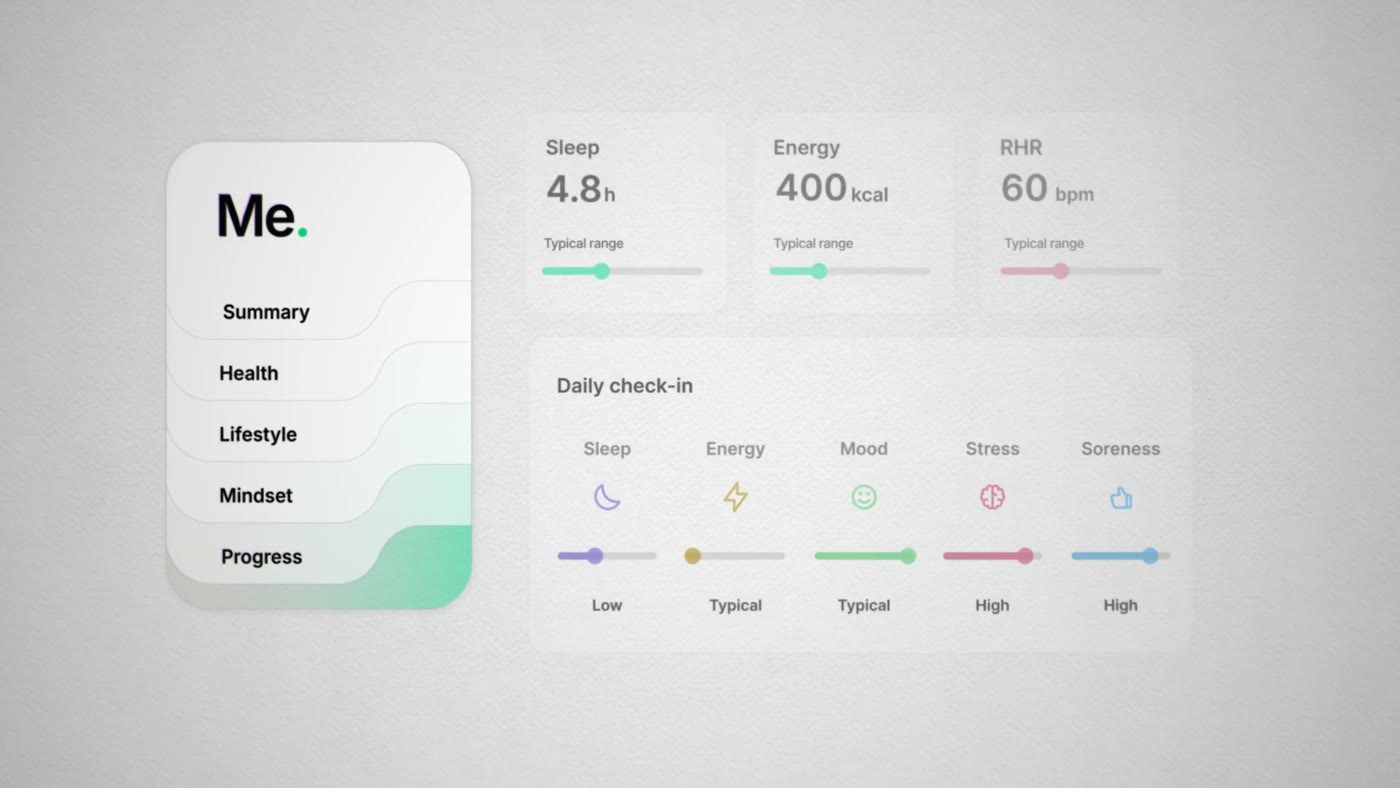
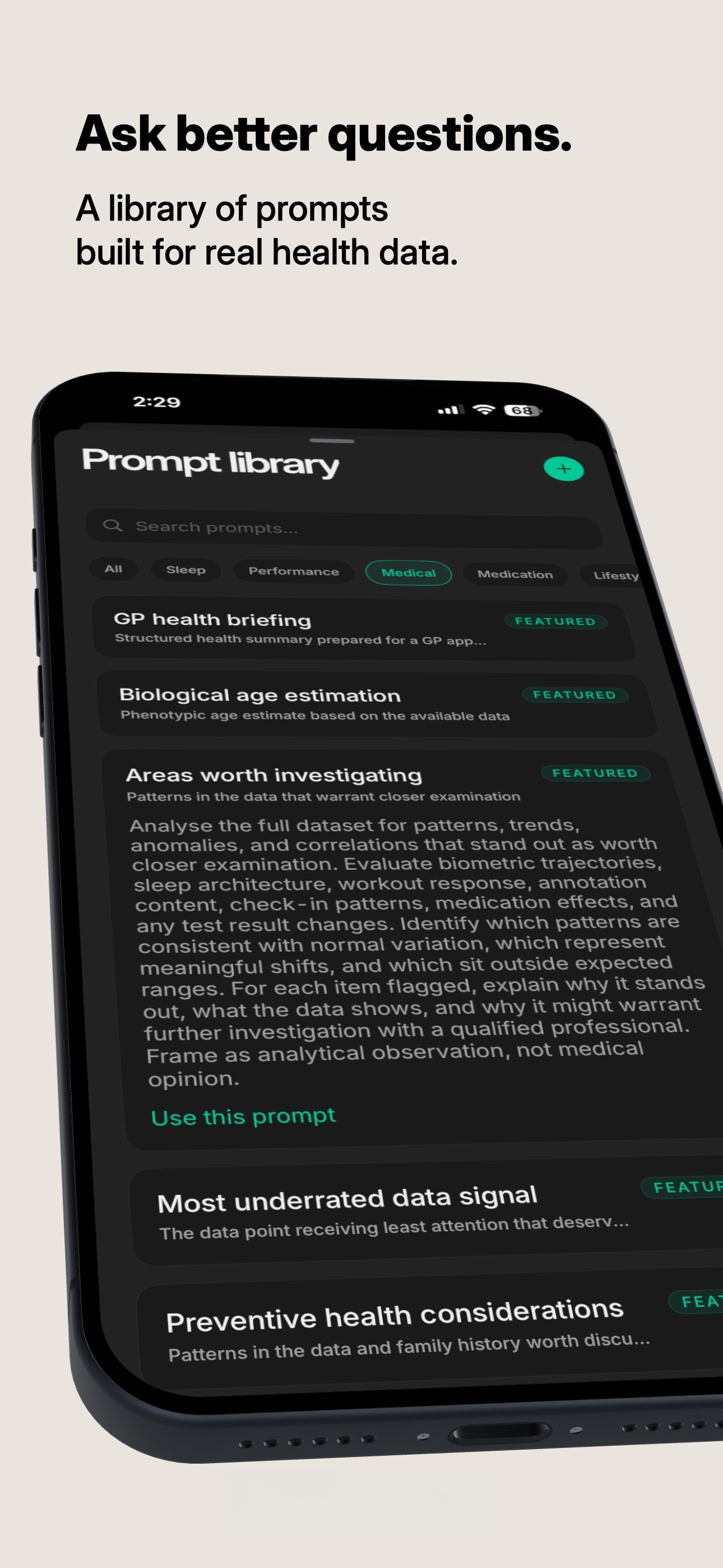
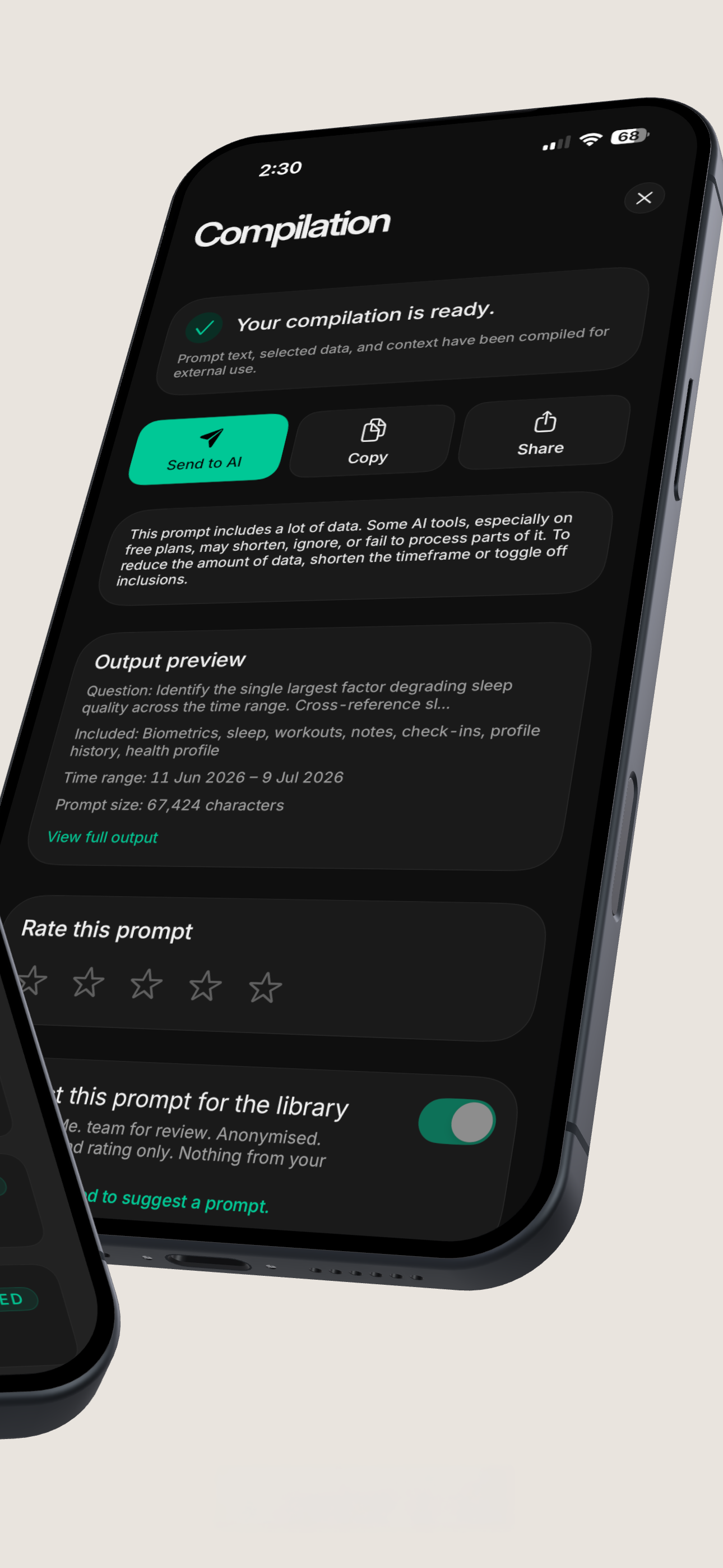
Me. reads the Apple Health data someone already has, lets them add the context only they hold, and compiles it into one structured document they can hand to a GP, a coach, or an AI they choose to trust. It will tell you a resting heart rate has moved twelve beats and that three readings sit outside the usual range. It will not tell you what that means, and that is deliberate.
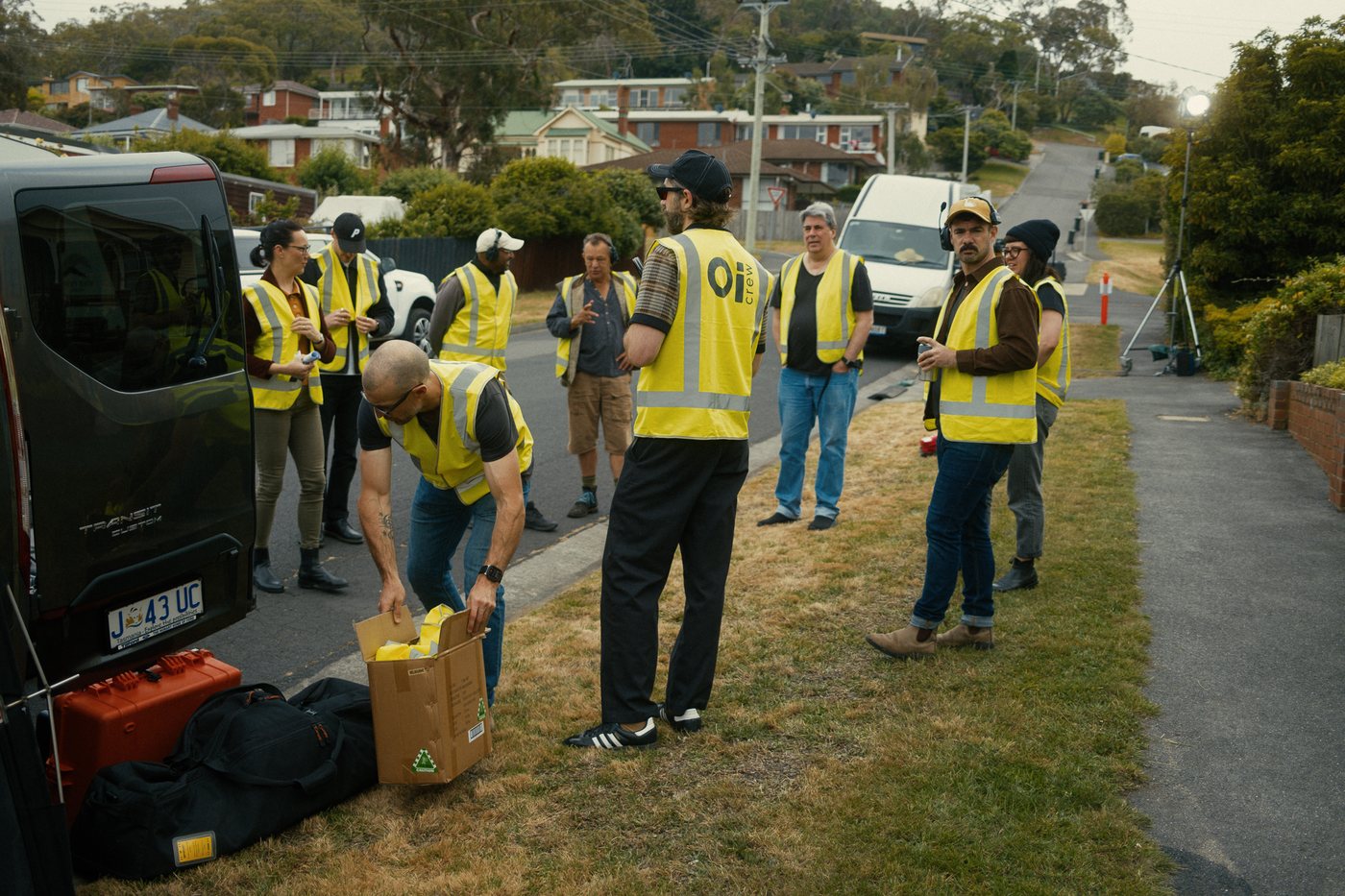
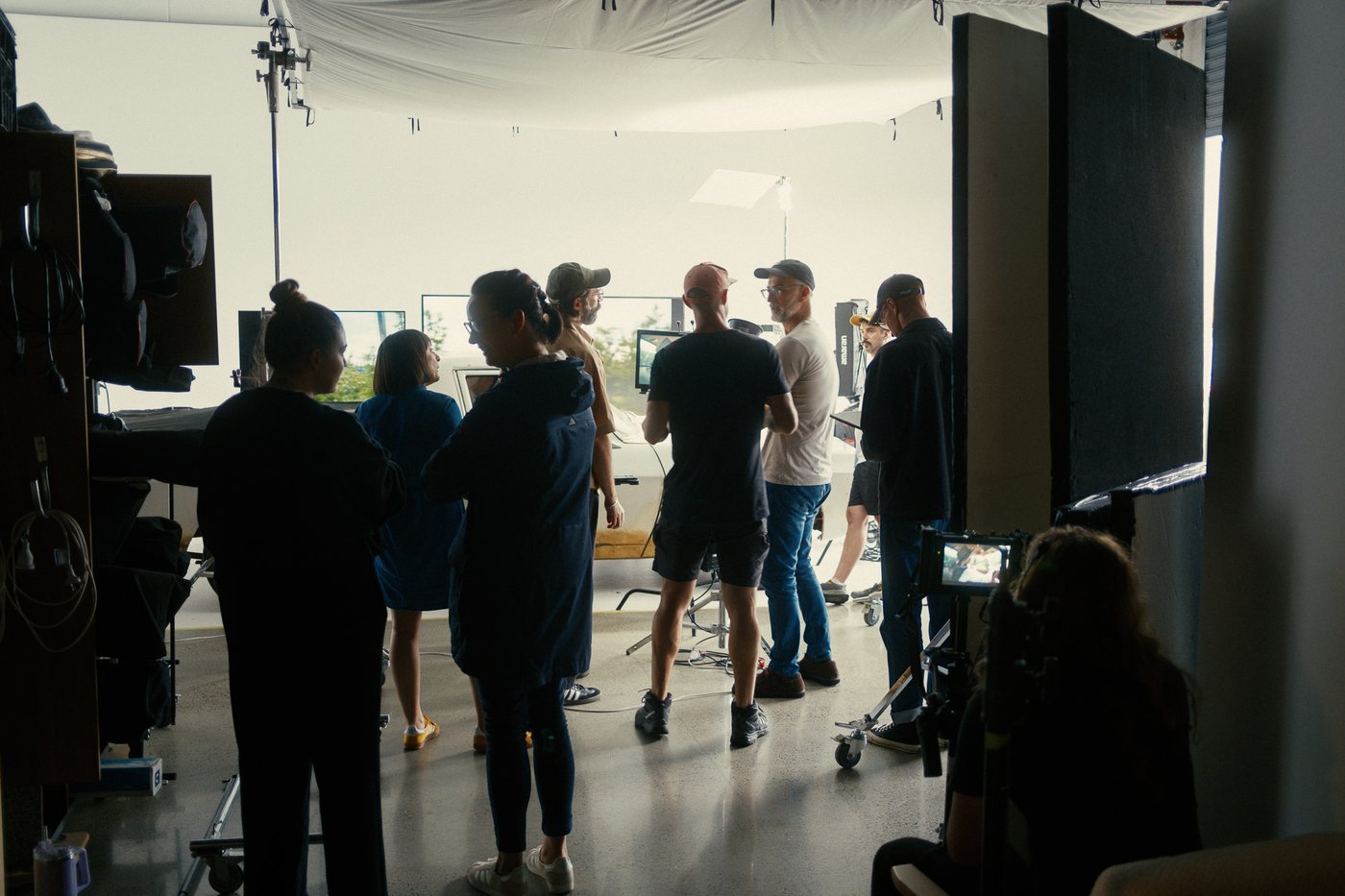
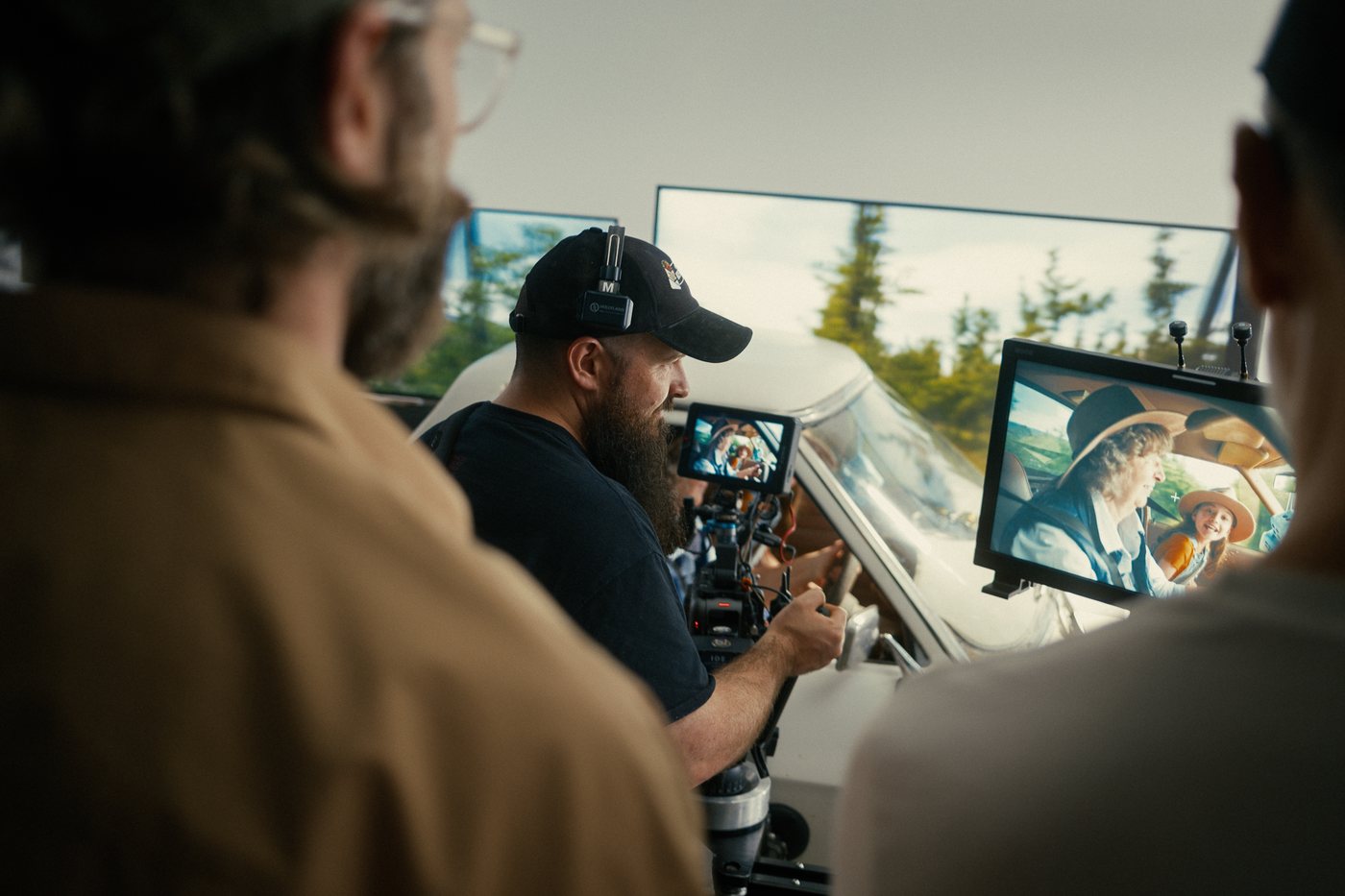
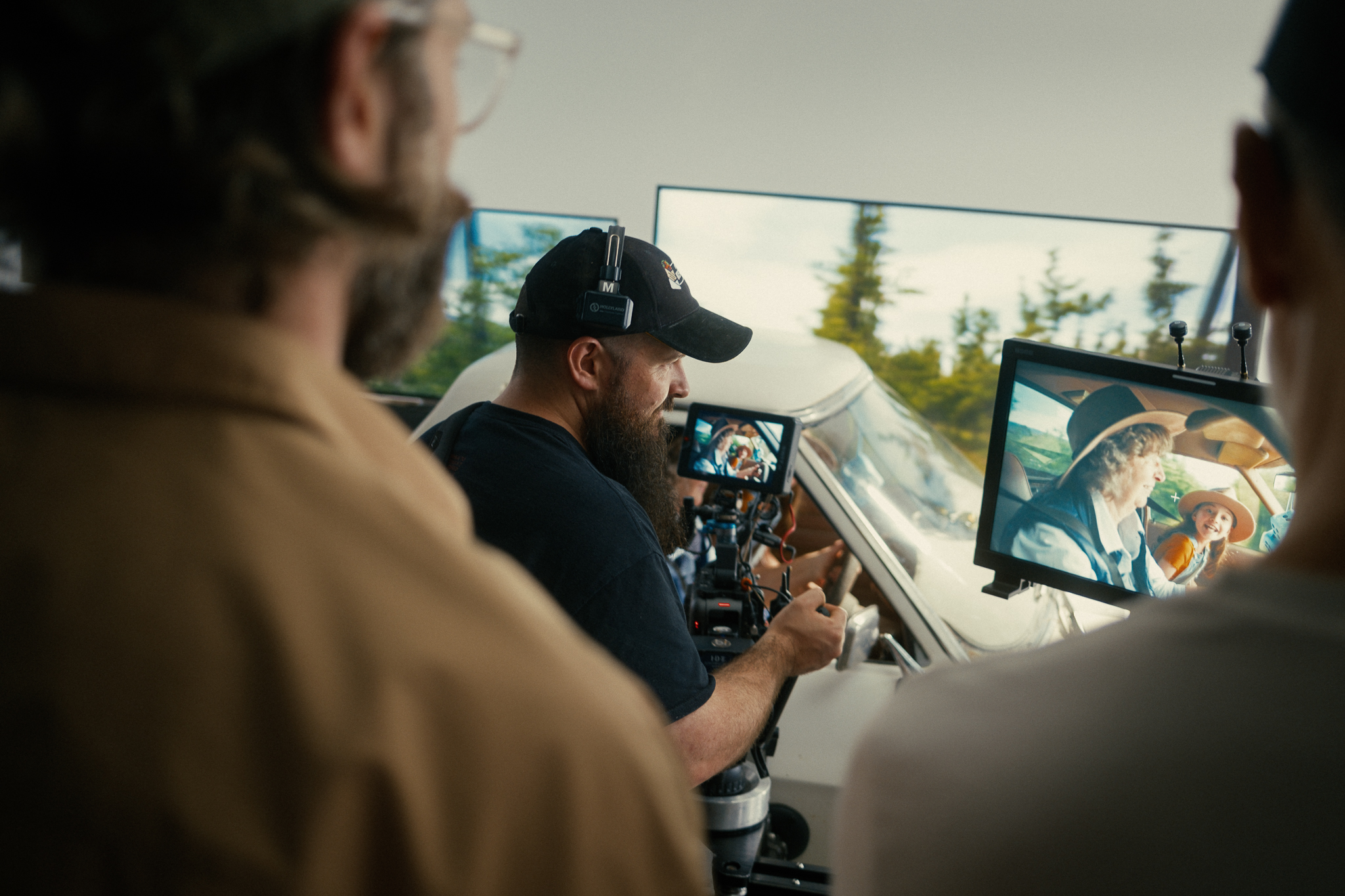
The explainer film. Both cuts are downloadable in the assets below.
“Algorithms can work well, but they can also create the impression of certainty without having the full picture. I did not build Me. to make that call itself, quietly, from the outside.”
“Me. is a catalyst in that process.”
The architecture
Nothing to sell
There is no Me. account and no Me. server. The data stays on the device, with an optional iCloud backup controlled entirely from the user’s own settings.
“You are not trusting us with your health data. We are giving you a place to hold it yourself. It cannot be sold because we do not have it.”
The pricing follows from the same idea. The free tier is complete, and Me. Pro can be bought once rather than rented, which he considers the honest arrangement for a record someone intends to keep.
In practice the daily cost is small. He uses it himself, every day.
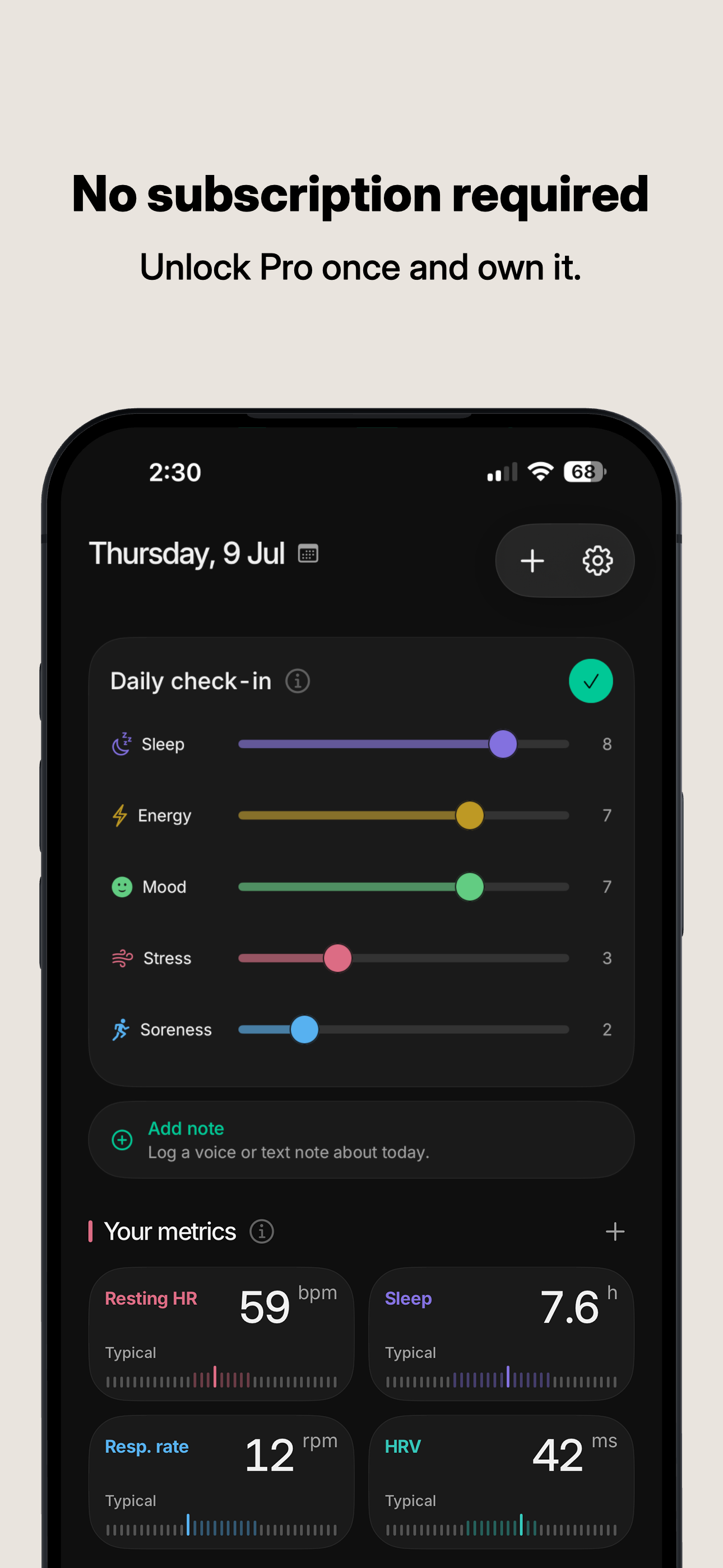
“Each morning the check-in takes about 15 seconds to capture how I am feeling. I usually train early, and after the workout I log what happened, how it felt, and anything that differed from a similar recent session. Me. becomes most valuable when life is not perfect and the plan needs to change. The main result is clarity. I am not waking up confused about what to do.”
The studio
Thirty years advising, then building
“We have seen more change in the past six months than in our previous thirty years, and we say that as a studio that lived through film to digital and the arrival of the internet. At some point the question stopped being what the change means for our industry and became what we could build with what it was teaching us.”
“I am very passionate about my home, Tasmania. We spend our days promoting this unique place: the businesses that operate here, the people who live here, the people who use it as a base to express themselves nationally and internationally. We have proven over the years that we punch above our weight in nearly every area, and building a simple application with broad health value should be no different.”
The studio ships it from Tasmania to every App Store storefront except mainland China, on the same day, because there is no regional infrastructure to stage.
“We are not trying to complicate something that does not need to be complicated. The concept is simple. The sooner you invest a small piece of time, the sooner that investment starts compounding.”
“Me. gives your data a place to live, and your story the power to shape what comes next.”
Every quote above may be used freely, no approval needed. The founder is available for interview. The full Q&A follows.
Fact sheet
The short version.
What it is
A query-first iOS app that reads the Apple Health data you already have, lets you add your own context, and compiles a structured document ready for whoever you choose to read it: any GP, any coach, or any AI (ChatGPT, Claude, Gemini).
Me. does not tell you what your results mean. It provides the structure that makes real interpretation possible.
Works with
Any device that writes to Apple Health.
Privacy
Everything stays on your device. No Me. account. No Me. server. Optional iCloud backup, controlled in settings.
TelemetryDeck anonymous, privacy-first analytics, disclosed in-app with an opt-out toggle.
Free tier
Full: check-ins, notes, complete profile, saved prompts, training plans, and 7-day compiles up to 5 times a month.
Me. Pro
Full-history compilation, unlimited compiles, and profile change history, with a 7-day free trial. AUD $4.99 a month, or AUD $29.99 once.
The same tiers show as US $2.99 and US $19.99 on the US store, and every storefront shows its own local price. No subscription required: buy Me. Pro once and own it.
Availability
Launched 12 August 2026, in every App Store storefront except mainland China.
Studio
Oi Studios, an independent studio in Hobart, Tasmania. Me. is its first product.
The full Q&A, 13 August 2026. Quotes may be used freely.
Why did you build this?
Turning 40, I could have bought a motorbike. Instead, I built a health app. It may be the most productive midlife crisis I could have chosen. Me. came from about three years of trying to connect everything I was learning about health and training with the data I was already collecting. I was good at recording things: workouts, sleep, health metrics. The problem was that the data and the learning were disconnected. The data sat across Apple Health and a handful of other apps, each showing part of the picture, sometimes contradicting each other. The recurring moment was every morning: am I getting better, am I recovering well enough, is the planned session still the right decision? I could make assumptions from experience, but I could not answer with confidence. The problem is not collection. It is context. Me. became the support system underneath those decisions. And that gap is not just mine. Most people already have the data. They just cannot use it properly.
Why did a creative studio build a health app?
We have seen more change in the past six months than in our previous thirty years, and we say that as a studio that lived through film to digital and the arrival of the internet. We have been learning this shift hands-on, in client work, every week. At some point the question stopped being what the change means for our industry and became what we could build with what it was teaching us. We chose the most important space there is: personal health. Everything we know about making complex material clear for a specific audience applies directly. A GP, a coach, and an AI are audiences. Your health data is the raw material. Me. is the work of getting it ready. The goal in the studio has never been to replace experienced judgment, it is to put judgment where it adds the most value. Me. is that same principle, applied to your health data.
Who is it for?
Anyone who already has Apple Health data and wants it to be useful rather than just collected. Someone trying to make sense of six months of poor sleep. Someone managing several medications and appointments who does not want to walk into a specialist relying on memory. Someone training seriously who wants their coach working from the whole picture, not just a workout log. People who already talk to an AI about their health and want it starting from their real context instead of a blank page. Me. does not assume a diagnosis, a sport, or a particular device. It assumes you have data, and a GP, coach, or AI you trust to look at it.
Why does Me. refuse to interpret?
Me. is the gateway to real interpretation: it compiles the structured picture so the reader you choose can interpret well. Algorithms can work well, but they can also create the impression of certainty without having the full picture. I did not build Me. to make that call itself, quietly, from the outside. That belongs to your GP, your coach, or an AI you already trust and can question directly. Me. stops at the document. It compiles your data and your own context into a structure that reader can actually use, then gets out of the way. That refusal is not a limitation I am working around, it is the reason you can trust what Me. hands over: nothing has been summarised, scored, or interpreted before it reaches you, so there is nothing standing between your data and whoever you chose to read it.
Why one-time pricing?
Because your health data is not something you should have to keep paying to keep using. The easiest way to make a health app commercially aggressive would be subscriptions, engagement loops, scores, and constant notifications. Most of those things would make Me. a worse product. Me. is free to use fully: check-ins, notes, your complete profile, saved prompts, training plans, and compiling the last 7 days up to 5 times a month. Me. Pro adds full-history compilation, unlimited compiles, and profile change history, with a 7-day free trial. After that, AUD $4.99 a month if you would rather pay as you go, or AUD $29.99 once. The same tiers show as US $2.99 and US $19.99 on the US store, and each storefront shows its own. No subscription required. You pay once, and you have it. You can change providers, doctors, coaches, or AI tools without rebuilding your entire history.
What about privacy?
You are not trusting us with your health data. We are giving you a place to hold it yourself. We cannot access the health data stored in Me. It stays on your device. It cannot be sold because we do not have it. There is no Me. account and no Me. server. If you want a backup, optional iCloud backup is there, controlled entirely from your own settings. Me. uses TelemetryDeck for anonymous, privacy-first analytics, disclosed in-app with an opt-out toggle. The record remains yours.
Where did Me. launch?
Every App Store storefront except mainland China, from day one. Mainland China has its own rules for apps with AI features and we have not taken that on yet. Because Me. runs on your device with no Me. server behind it, there is no regional infrastructure to stage: the same app, handling your data the same way, ships internationally at once. We are a team of about ten people on a small island at the bottom of the world, building something we want anyone with an iPhone to use. The world is open now, and Tasmania is an island of innovators, so building here for an international audience makes sense rather than being a stretch. We are fortunate to live somewhere with proof that ambitious ideas built locally travel. MONA is an obvious example just down the road. A small team can move quickly: we can refine, respond to users, and improve the product without layers of delay.
How do you use Me. yourself?
Daily. Each morning the check-in takes about 15 seconds to capture how I am feeling. I usually train early, and after the workout I log what happened, how it felt, and anything that differed from a similar recent session. I have conducted a fairly unreasonable amount of research on myself. The most useful piece has been my own personal sleep study: months of logging eating close to bedtime, screens, training, and disruptions during the night alongside the sleep data itself, until the picture of what actually helps me sleep got clear. From a training perspective, I set a goal, build a plan with an external AI, bring it into Me., and keep adjusting based on how I feel, my current numbers, my doctrine, and what is happening in my life. When everything is humming, it is easy to wake up and go for a run. Me. becomes most valuable when life is not perfect and the plan needs to change. The main result is clarity. I am not waking up confused about what to do.
Why not just use the native Apple Health connector in ChatGPT?
Use it if it works for you. Access to metrics is not the same as knowing the person. My watch knew I slept badly. It had no idea a baby was involved. Me. adds the information surrounding the numbers: your context, your conditions and medications, your notes about how things felt and what was happening in your life, compiled with the data into one structured document you can check before you hand it over. And Me. prepares that record for use beyond any one provider or conversation. Platforms change. Features close. A person should not lose their health context because one piece of infrastructure changes. The platforms connect your data. Me. prepares it, and keeps it yours.
Isn’t Me. just an export tool?
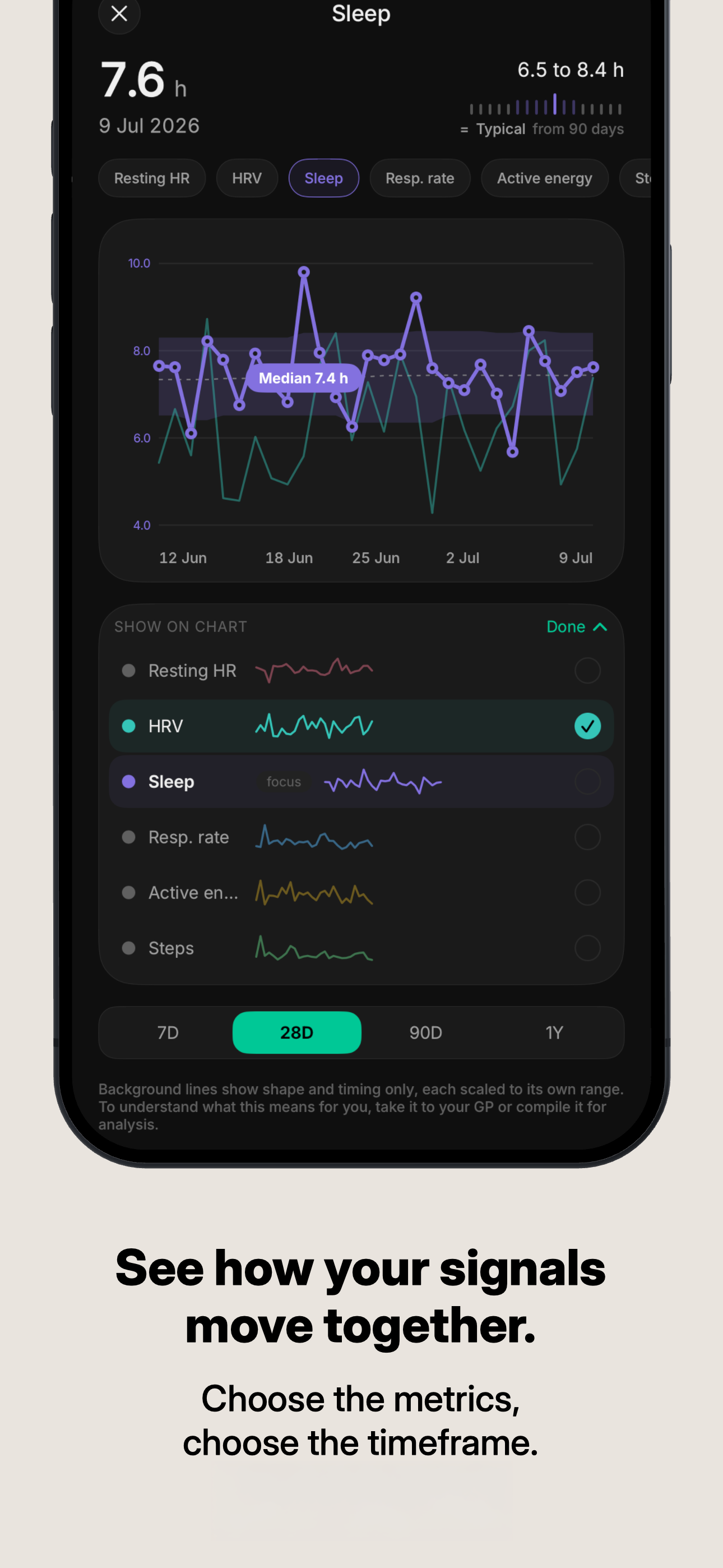
Exporting is one function, and an important one: your compiled record goes wherever you choose. But a filing cabinet does not just hold documents, it holds them in a way that makes them findable and useful. Me. does that for health data, context, notes, reports, and whatever else you choose to include, with a visualisation layer for seeing values and trends alongside the context you added.
What happens when Apple builds this?
Apple may eventually build something similar. I do not know when, and that possibility does not stop us from building something useful now. A small team can move quickly and add focused functionality that a large company may take much longer to prioritise. Other applications will add similar functions too, and that validates the need. You start where you can make the product useful now. For us that is Apple’s infrastructure, and over time Me. could move across platforms. Just because something might happen in the future does not mean we should stop trying to make a difference in the meantime.
Why should anyone trust an app studio with health data?
You should not have to, and with Me. you do not: the data never comes to us. What you are trusting is the tool, and the people behind it. Oi Studios has been operating for thirty years, and we intend to operate for another thirty. Many software startups cannot say that. We are not medical professionals, and we do not present ourselves as medical professionals. Our experience is in building reliable systems, managing information, and designing things people can actually use. The health expertise stays where it belongs: with your doctors, specialists, coaches, and the analysis tools you choose.
What do you believe Me. can become?
The app that anyone with an iPhone and an interest in their health owns. You pay for it once, and you have it. The second someone starts adding context, the value begins to compound: months or years of structured health context they can bring to a doctor, a coach, a specialist, or a future AI system that does not exist yet. My bet is that personal context becomes more valuable as AI becomes more capable. The data already exists. The models will improve. The missing layer is a clean, portable, user-owned record of the person. I believe owning and understanding your own health record should be ordinary, the same way keeping your own records and your own photos already is. There is a personal layer to this too. I work to live, not the other way around. A great life starts with balance, and for me balance starts with building and maintaining health. No one cares more about your health than you do. Me.’s profile carries a doctrine layer for exactly that, the principles and preferences you hold and want adhered to whenever your data is read. If Me. helped one person make a positive change, that would matter. The ambition is larger than one person, but it starts there.
Assets
Everything, no sign-up.
Everything on this page, plus both cuts of the film, is in one folder:
download all assets. No sign-up, no request form.
Explainer film16x9, 18.5MB. A 4x5 cut for vertical formats is in the same folder.Watch and download →
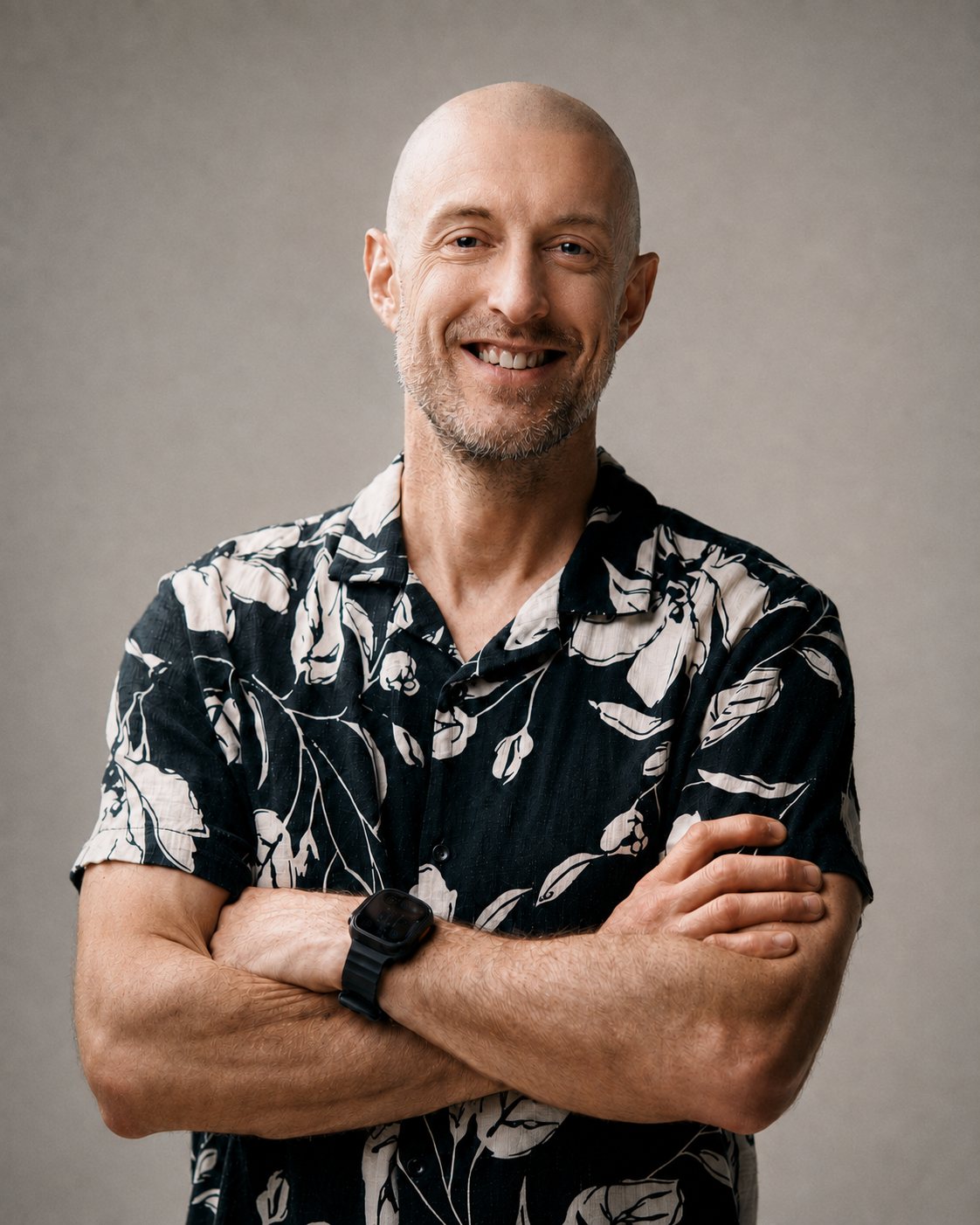
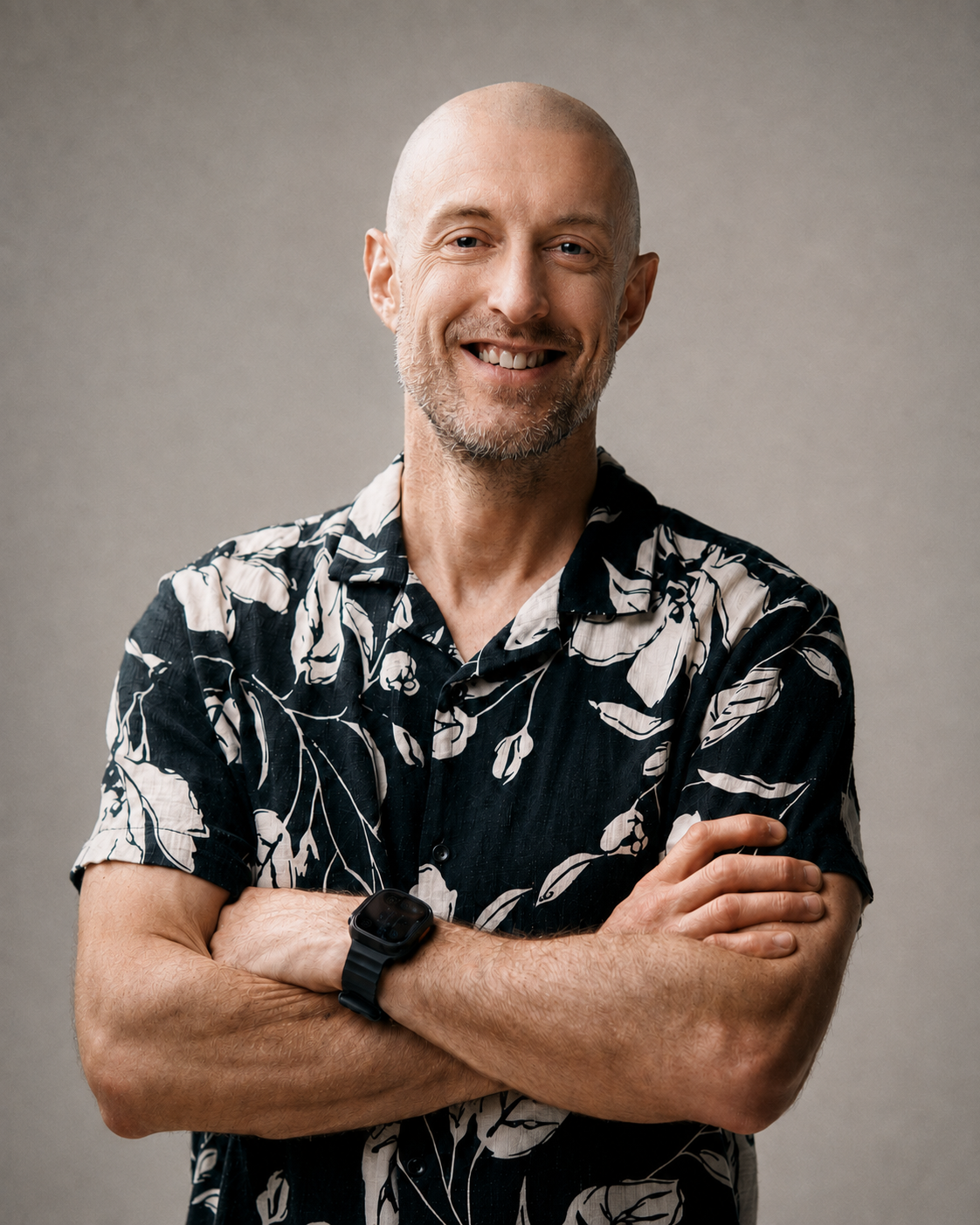
Matt Osborne, portraitFounder. Studio portrait, 1122 x 1402.Download ↓
Me. is a query-first iOS app that reads the Apple Health data you already have, adds the context only you can provide, and compiles a structured document ready for your GP, your coach, or any AI. It is built on a single privacy architecture: everything stays on your device, there is no Me. account and no Me. server, and an optional iCloud backup is controlled entirely in your own settings. Me. is available in every App Store storefront except mainland China.
About Oi Studios
Oi Studios is an independent studio based in Hobart, Tasmania. Me. is its first product. Oi Studios is a trading name of Osborne Images Pty Ltd, which also holds the registered business name Me. Health Intelligence. Founder: Matt Osborne.